


Artificial intelligence is no longer a futuristic concept in retail, it has become the foundation of modern merchandising, pricing, and customer experience strategies. While many still associate AI with buzzwords, retailers that have embraced it are already seeing measurable performance gains.
According to The Retail Leader’s Guide to Revenue-Driving AI:
- 37% average revenue growth
- 30% reduction in operational costs
- 2.5× ROI within the first year
In a world shaped by shifting consumer expectations, volatile demand, and heightened competition, AI has transitioned from “nice to have” to a core operational requirement.
This article explores three of the highest ROI AI applications in retail today, inventory optimization, personalization, and dynamic pricing, and provides implementation insights based on real data.
Why Retailers Are Turning to AI Now
Retailers face an increasingly complex environment:
- Unpredictable demand cycles
- Rising acquisition costs
- Intense online competition
- Inventory uncertainty
- Increased pressure on margins
The guide emphasizes that AI’s greatest impact is often behind the scenes in areas like forecasting, replenishment, and operational efficiency, not just customer-facing experiences.
The end result is both operational improvement and a meaningfully better customer experience.
1. AI-Powered Inventory Optimization: The Fastest Route to Margin Recovery
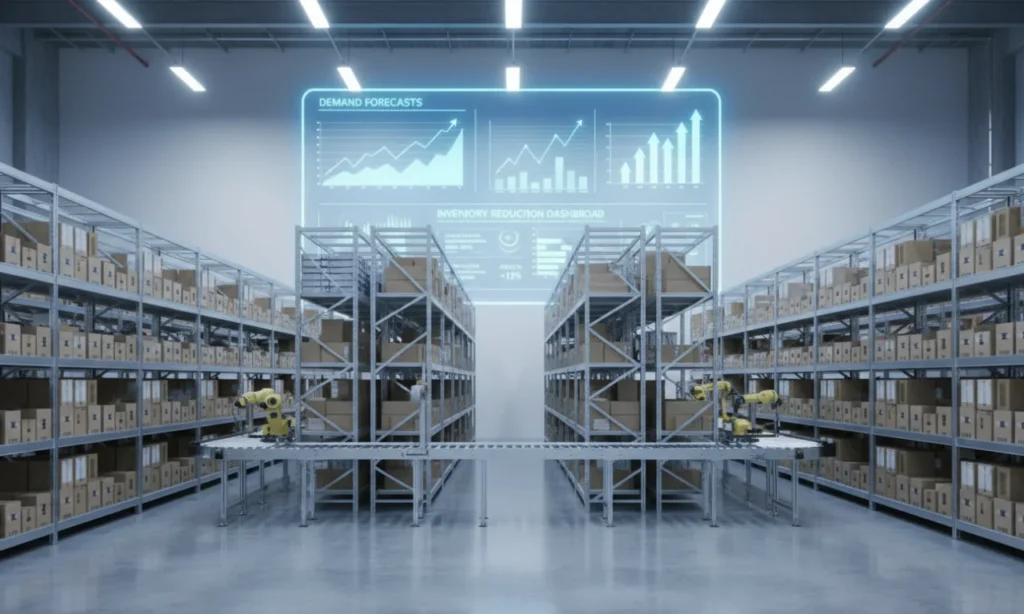
Inventory mistakes are expensive: overstock kills cash flow while stockouts kill sales. AI solves this by predicting demand with precision and automatically optimizing stock levels across channels.
How It Works
AI incorporates:
- 12+ months of sales history
- Product-level trends
- Supplier lead times
- Seasonal patterns
- Local or regional variables
- External inputs such as weather and events
This allows teams to maintain optimal inventory levels, reduce waste, and improve availability.
Business Impact
The guide highlights:
- 32% reduction in stockouts
- 23% lower inventory carrying costs
- 27% increase in inventory turnover
A fashion retailer cited in the data reduced seasonal write-offs by 22% using AI forecasting.
Why It Matters
Inventory optimization delivers fast financial returns by improving:
- Working capital
- In-stock performance
- Sell-through efficiency
- Markdown avoidance
With a typical ROI window of 3–6 months, it remains one of the highest-leverage AI applications for retailers.
2. Personalized Recommendations: Turning Customer Data Into Revenue
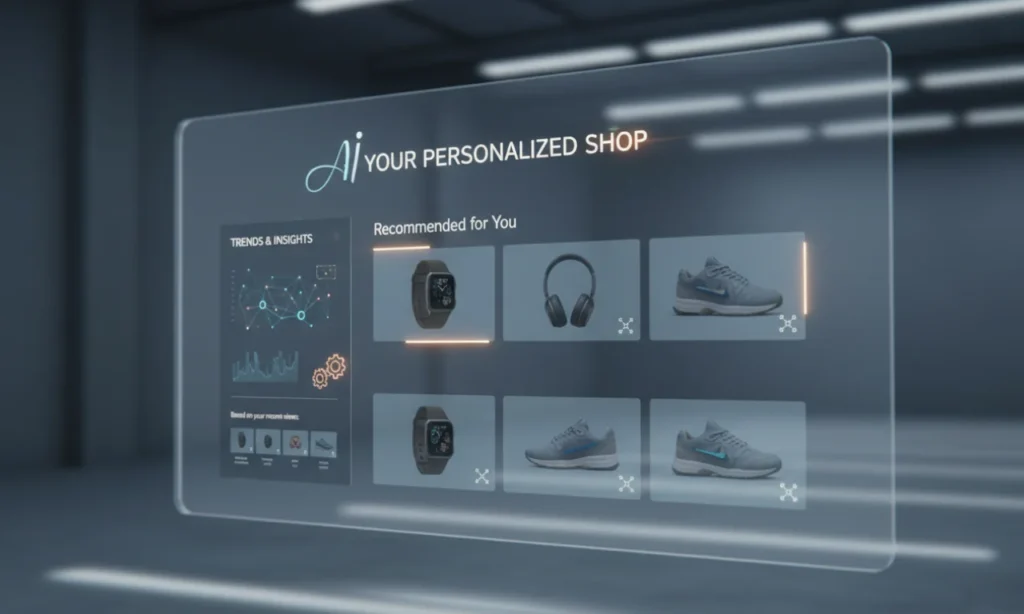
Customers expect customized shopping experiences. AI-powered recommendation systems tailor product suggestions across web, app, email, and even in-store screens.
How It Works
AI analyzes:
- Browsing behavior
- Purchase patterns
- Customer segments
- Engagement signals
- Product attributes
- Real-time interactions
It then delivers highly relevant product recommendations to guide purchasing decisions.
Business Impact
Retailers implementing personalization AI see:
- Up to 35% increase in conversion rates
- Higher AOV
- Greater repeat purchase frequency
A beauty brand increased upsell revenue 18% with AI-driven bundles.
Why It Works
Consumers often struggle to choose among dozens of similar products. AI minimizes this friction, increasing both satisfaction and sales.
Personalization also strengthens long-term customer value by improving engagement and retention.
3. Dynamic Pricing Optimization: Compete Without Racing to the Bottom
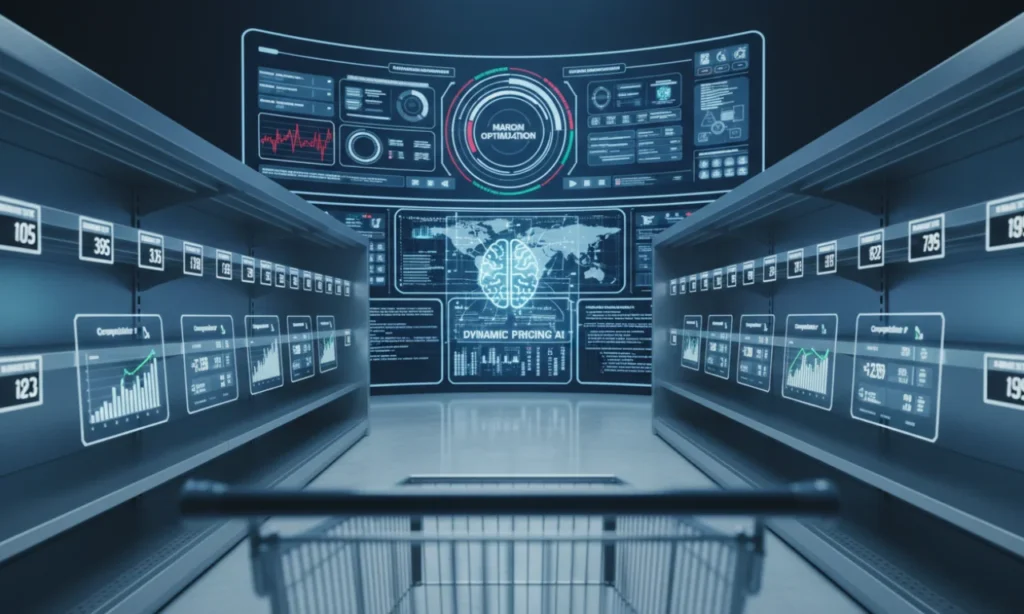
Pricing is one of retail’s most powerful profit levers, but also one of the hardest to manage manually.
AI pricing engines adjust prices based on real-time data, striking the perfect balance between competitiveness and profitability.
How It Works
AI models factor in:
- Competitor pricing
- Inventory levels
- Customer price sensitivity
- Historical demand
- Seasonality
- Margin thresholds
Business Impact
Retailers see:
- 8.7% revenue lift
- 6.3% margin improvement
- 11% higher sell-through rate
An electronics retailer improved margins by 12% after shifting to automated AI pricing.
Why It Matters
Consumers compare prices continuously across devices. Static pricing rules can’t keep up, AI ensures pricing remains both competitive and profitable at all times.
AI Works With Your Existing Retail Stack
Many retailers assume AI requires a replatform, but the guide shows modern AI integrates directly into:
- POS systems
- Inventory platforms
- ERPs
- CRMs
- E-commerce ecosystems
Integration options include:
- APIs
- Middleware
- Direct connections
- Data pipelines
This enables AI adoption without rebuilding the entire technology stack. Most integration timelines fall between 4–12 weeks.
Timelines & Budgets for Retail AI
The guide outlines typical investment ranges:
| AI Application | Timeline | Starting Budget |
|---|---|---|
| Inventory Optimization | 6–10 weeks | from $15K |
| Personalization | 4–8 weeks | from $12K |
| Dynamic Pricing | 6–12 weeks | from $18K |
These investments commonly pay for themselves within a single quarter.
Retail AI Scorecard: What to Measure
Key metrics include:
Inventory Optimization
- Stockout rate
- Inventory turnover
- Days on hand
- Working capital impact
- Markdown reduction
Personalization
- CTR on recommendations
- Conversion rate
- AOV lift
- Repeat purchase behavior
- CLV changes
Dynamic Pricing
- Margin per SKU
- Revenue per SKU
- Sell-through
- Competitive price index
Control groups and baseline benchmarks are critical for accurate ROI measurement.
How AI Development Services Support Retail Transformation
To successfully implement AI, retailers often leverage specialized expertise through an AI Development Service.
This type of service typically helps organizations:
- Build custom AI models tailored to their SKU structure and demand patterns
- Implement recommendation engines or pricing algorithms
- Integrate AI systems with existing POS, ERP, or e-commerce platforms
- Create dashboards for KPI monitoring and forecasting
- Ensure retail data pipelines are optimized and secure
For retailers without internal data science teams, or those looking to scale their AI initiatives, an AI Development Service provides the technical depth needed to deploy AI systems that are accurate, reliable, and measurable.
Conclusion: AI Is Now Essential, But It’s Also Accessible
Retail has entered an era where AI determines competitiveness.
The most effective entry points consistently delivering ROI include:
- Inventory Optimization
- Personalized Recommendations
- Dynamic Pricing
These applications reduce waste, improve margins, and elevate the customer experience, all without requiring a full system overhaul.
With modern integration methods and access to dedicated AI development services, retailers of all sizes can now deploy AI quickly, affordably, and with measurable outcomes.
The retailers growing fastest aren’t the ones collecting the most data,
they’re the ones using it intelligently.


